What on Earth is "The Cloud" Anyway? (Spoiler: It’s Just Someone Else’s Computer)
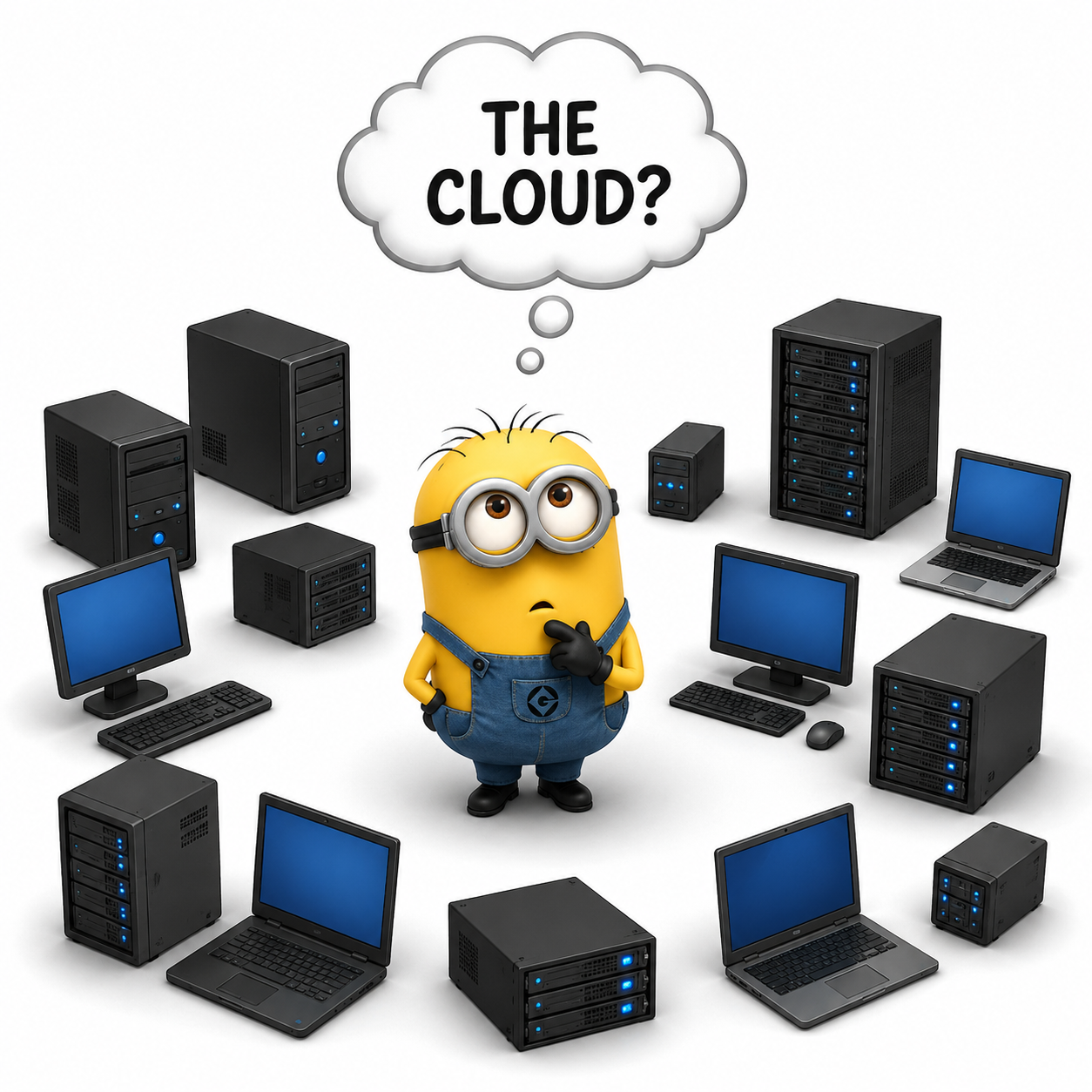
Have you ever noticed how tech people talk about "the cloud" like it’s some magical, invisible kingdom floating in the sky? They say your photos are there, your emails live there, and your favorite streaming shows drop down from it. But if you look out your window on a rainy day, you aren't going to see your vacation photos drifting past.
Let's strip away the marketing fluff. The cloud isn't a meteorological phenomenon. It is literally just a collection of massive, high-powered computers sitting in giant, air-conditioned warehouses owned by companies like Amazon, Google, and Microsoft. When you save a file to the cloud, you are just renting a tiny corner of their hard drives.
The "Pizza as a Service" Guide to Cloud Types
To make sense of the different types of cloud computing techies love to argue about, let's look at something everyone understands: pizza.
Infrastructure as a Service (IaaS): This is like renting a commercial kitchen. They give you the ovens and the counters, but you bring your own dough, sauce, cheese, and chef. You build everything from scratch.
Platform as a Service (PaaS): This is like ordering a pizza kit to your house. The dough is made, and the toppings are prepped. You just assemble it and bake it.
Software as a Service (SaaS): This is walking into a restaurant or ordering delivery. You don't care how the oven works or who chopped the tomatoes; you just want to eat. This is Netflix, Gmail, or Spotify.
Why Every Business Shifted to the Cloud
Why did the whole world stop buying physical software discs and hard drives? Because owning computers is a hassle. Imagine if every time you wanted to drive a car, you had to build a garage, hire a mechanic, and refine your own gasoline. That’s what running traditional IT infrastructure is like.
It Saves Money: You only pay for what you use. If your website gets crazy busy on Black Friday, you rent more computer power for one day, then scale back down.
Automatic Updates: You never have to click "Update software" and wait three hours. The cloud provider handles security patches in the background while you sleep.
Disaster Recovery: If you spill coffee on your laptop today, your heart might drop, but your data is fine. You just log into a new device, and everything is exactly where you left it.
The Big Takeaway: The cloud is the ultimate digital rental property. It turns computing from an expensive piece of hardware you have to maintain into a utility bill you pay monthly, like electricity or water.