5G and the Internet of Things – Why Your Smart Fridge Actually Matters
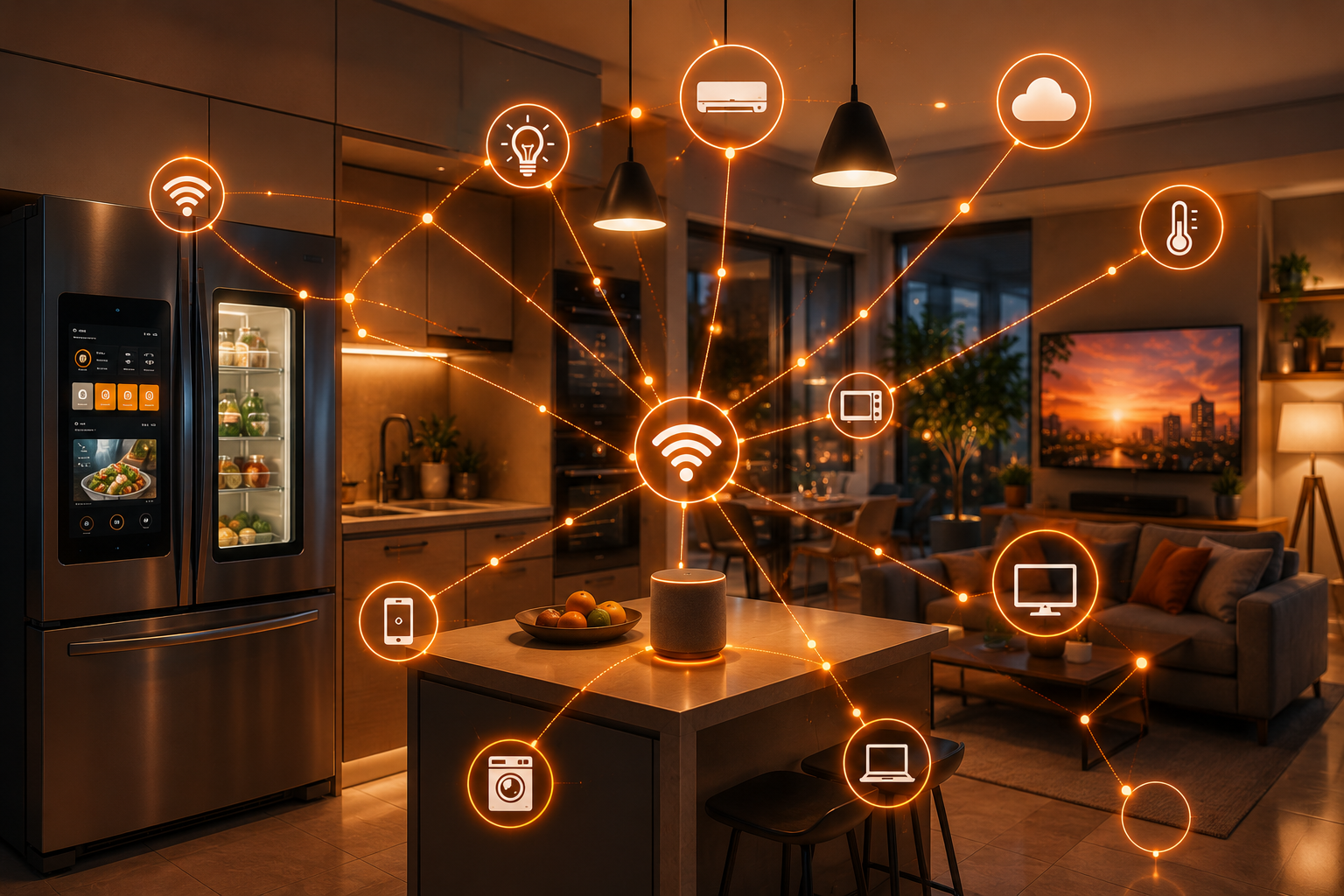
We live in a world where your refrigerator can text you when you are out of milk, your watch monitors your heart rhythms, and your thermostat lowers the temperature when it notices you’ve left the house. This connected world is called the Internet of Things (IoT).
But for years, IoT felt a bit like a gimmick. Smart devices were slow, frequently disconnected, and complicated to set up. That is where 5G comes into play. 5G isn't just about downloading movies faster on your phone; it is the invisible glue that finally makes the sci-fi dream of a connected world work seamlessly.
The Two Ingredients: Bandwidth vs. Latency
To understand why 5G is a game-changer for smart devices, we have to look at two concepts that drive wireless networks: Bandwidth (how much data can fit through the pipe) and Latency (how long it takes for a signal to travel from point A to point B).
Think of 4G like a two-lane highway. It works great for a few fast cars (your smartphone streaming a video). But if you try to put thousands of tiny smart devices on that same highway, you get a massive traffic jam. 5G turns that highway into a massive, 100-lane super-freeway.
How 5G Activates the Internet of Things
Because 5G can handle millions of devices per square mile with almost zero lag (latency), it enables devices to communicate with each other in real-time without needing a human to middle-man the conversation.
Smart Cities: Streetlights can dim themselves when roads are empty, and trash cans can ping garbage trucks only when they are actually full, saving city budgets millions.
Connected Healthcare: A wearable monitor can notice a spike in a patient's blood pressure, immediately alert their doctor's system, and adjust an automated insulin pump instantly.
Autonomous Driving: Self-driving cars don't just rely on their own cameras; they talk to the cars around them, the traffic lights ahead, and the road sensors below to completely eliminate human driving errors.
The Trade-off: Convenience vs. Privacy
While having a home that anticipates your every need sounds fantastic, it does introduce a massive question mark around privacy. Every smart device you add to your home acts as a tiny sensor gathering data about your daily habits.
If your smart bed knows when you sleep, your smart fridge knows what you eat, and your smart speaker hears everything you say, that data becomes incredibly valuable to advertisers. The trick to enjoying the Internet of Things is finding the balance between letting tech make your life easier without letting it map your entire private routine.